Featured
Table of Contents
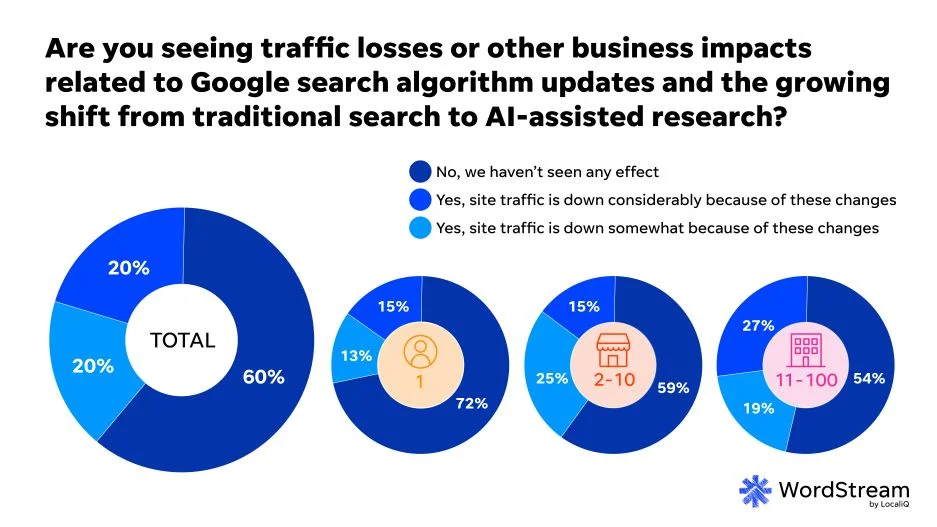
Specifically CMOs and those responsible for a business's marketing success. AI-generated responses appear like a direct threat to the conventional organic traffic sites utilized to obtain from search engines. Before, you had to click a website to see the outcomes. Today, LLMs simply rip the material on websites and individuals no longer need to go to a site anymore.
While I personally think this hazard is blown totally out of proportion (based on information from websites I have actually personally seen), I do not believe it's an excuse to neglect it completely. From my own experience growing both blogs and YouTube channels, specifically to sell something, I can tell you that video converts way more than composed content.
It's a lot simpler to inform if somebody is lying or full of it if you can see their facial expressions and their tone of voice. YouTube needs to absolutely be in your SEO and content method.
And due to the fact that you have actually developed the trust with video, your standard SEO efforts will convert much better. There's even more to it. Previously this year, I had a hunch that if I turned a few of my best ranking post into YouTube videos, and embedded them into my existing blog posts, my post would rank even better.
Applying Machine Learning to Enhance Search OptimizationI made a YouTube video about the topic, embedded it into that blog post, and I have actually been ranking # 1 since.
Modern Keyword Audit Tools for Growth
Keep concentrating on Google, which still owns 90% of search market share. Invest in AI search experiments if you have budget plan, but do not desert what's in fact driving traffic and conversions today. In 2025, we saw everyone speaking about how AI search was going to take over Google. Beyond simply SEO, the marketing community as an entire started to get bombarded with influencers trying to ride the AI hype train.
It became hard to discover relied on sources that weren't biased or had a prejudice to sell us something. While I do believe there are advantages to utilizing LLMs in our workflows, I do believe it has actually been overhyped. And in 2026, I predict lots of marketers will understand that ChatGPT and Perplexity are just a little part of the SEO market.
Applying Machine Learning to Enhance Search OptimizationGoogle still controls 90% market share and with its AI Mode and AI Overviews, it's in the best position to win the AI search engine race. Browse habits hasn't basically moved far from Google. Beyond just that, there are a few things that have rubbed me the wrong way about the AI SEO trend.
Creating High-Impact Data-Backed Content Workflows
Some claim ChatGPT has a 16% discussion rate and is much better by more than 2X compared to Google. However what these online marketers do not understand is that Things like homepages, pricing pages, or bottom of funnel material, tends to be shown in ChatGPT. The informational top of funnel material is "consumed up" by LLMs and shown to users without anywhere to click.
Google's conversion rates reveal less since the traffic is greater due to it being watered down by all the top of funnel content that is in the equation. Other things like how ChatGPT can make things up, it never ever fully follows prompts correctly (i.e.
I do still believe that think companies bigger set aside an experimental budget speculative spending plan things evaluate ChatGPT apps and other AI SEO tools.
Why Brands Require Predictive SEO Insights
These techniques might work now in ChatGPT and other LLMs, however they're short-term plays that will eventually get punished. Focus on white hat techniques that build real authority and trust over time instead of going after quick wins that won't last.
Now, the algorithm is fully grown enough to neglect all that nonsense. ChatGPT and other LLM algorithms are not as mature. I can't name this person, however I met an SEO director at a huge banking company. This individual told me they (and all their competitors) are creating microsites (like small blog sites) on various domains.
And from there, they are using their main business domain, that has an extremely strong brand authority, and sending backlinks to the microsite. And this has actually resulted in higher rankings for their brand in LLMs like ChatGPT.It blew my mind that big, credible companies are doing this. And I understood just how much black hat (or grey hat) strategies are going on behind the scenes.
In 2026, I anticipate these methods will continue to take place. Till ChatGPT's algorithm gets as wise as Google's search algorithm. That seems like a long time from now. Anyways, I personally would not advise participating in this. It's brief term thinking and your energy is best spent on white hat marketing techniques that can stand the test of time and improve your websites trust signals gradually.
Share real insights, utilize your own images and videos, and construct topical authority in your niche. This is how solo creators and little teams can beat substantial brand names in 2026. This is one of the most significant SEO trends for content marketing I'm seeing right now.
Ways AI Improves Modern Search Visibility
You require a real company, be it a newsletter service, a service-based business, SaaS business, or ecommerce shop. And after that you include on this human-centered niche blogging to the site to organically grow your core product/service offering. In 2026, I forecast that Google's algorithm will continue to get smarter about which websites contain AI material and which do not.
I know lots of people silently squashing it with AI produced content (even going after top of funnel keywords). However what I am saying is that engaging, human content will outrank AI created content without any original insights. There are 2 paths I see with SEO's today: Produce thousands of AI-generated post and get them to rank in the middle/bottom of page 1.
Produce a hundred human blog posts and get them to rank at the top of the first page. And anybody who writes better human material will rank higher in positions 1-3. The 2nd path is slower, however can yield greater ranking positions and more trust with readers.

Latest Posts
Aligning Strategic Goals for Search Experience
Improving Digital Experiences through API-First Design
Choosing a Modern CMS to Scaling Success